


Viorel Gîrbu: “Raising Salaries Is Easy, but You Must Ensure There Is Performance”
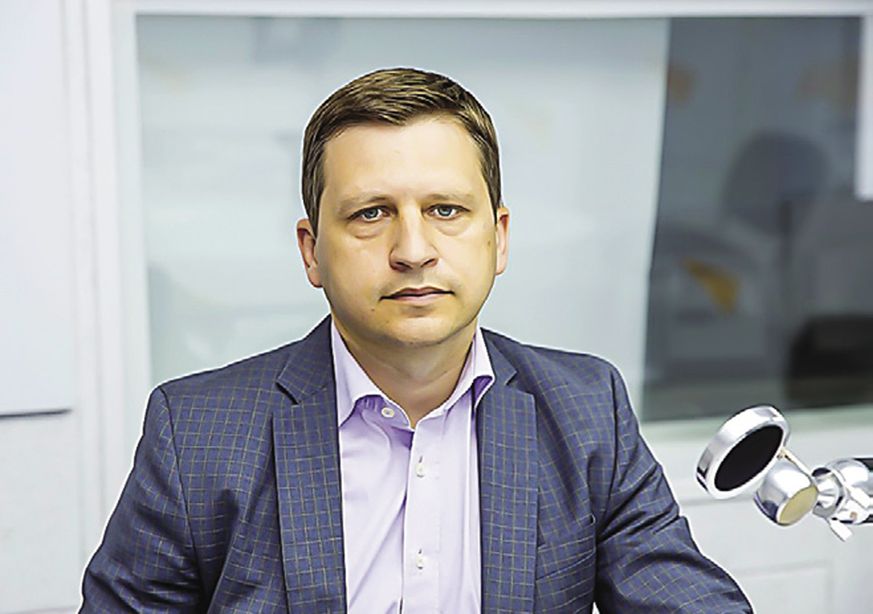
Independent economic expert Viorel Gîrbu spoke to the FES/APE Foreign Policy Bulletin about the priorities that the Tofan Government should pursue in the areas of economic policy and economic growth. The interview examines both the realities and challenges facing the Republic of Moldova’s economy and the difficulties of adapting it to the requirements of the European Union’s market and competitive environment. It also explores the structural gaps that the Republic of Moldova needs to address in order to navigate this process successfully. We invite you to read the full interview below.
The Tofan Government has committed itself to a comprehensive reform of the budgetary and fiscal system, as well as of public sector pay. In your view, what is the greatest weakness of the current system, and what should be the government’s immediate priority to ensure that this reform goes beyond a mere accounting exercise?
At present, one of the greatest vulnerabilities of the Republic of Moldova’s budgetary and fiscal system is the chronic and persistently high public finance deficit. This deficit fuels inflationary pressures and contributed, at least in part, to the inflationary shock experienced by the national economy beginning in 2022.
Even today, the fiscal policy pursued by the authorities continues to exert significant inflationary pressure. As a result, the government will need to find an appropriate response. To reduce the deficit, it can act either on the revenue side or on the expenditure side. In practice, however, cutting public spending is considerably more difficult than increasing taxes.
In this context, the government will have to decide how to calibrate its fiscal policy and how to explain to the public any tax increases that may be required to finance public expenditure.
At the same time, such an approach alone would not be sufficiently balanced. One would expect the Tofan Government to act simultaneously on both fronts: on the one hand, by improving the efficiency of public spending, and on the other, if necessary, by adjusting tax levels.
It should also be noted that the overall tax burden in the Republic of Moldova is not particularly high. However, the country’s challenges differ from those faced by many other states, making comparisons with countries such as Romania – where the tax burden is higher and closer to the European average –both relevant and worthwhile.
A Unified Pay Scale and the Privileges of Autonomous Institutions
The new public pay law promises a fairer system based on job evaluation and reduced disparities across institutions. How significant is the risk that this reform could place additional pressure on the state budget or generate dissatisfaction among certain groups of public sector employees?
With regard to public sector pay, a number of situations raise legitimate concerns, particularly in relation to positions within state-owned enterprises and certain autonomous institutions. In some cases, remuneration levels are excessively high and difficult to justify given the economic realities of the Republic of Moldova. This is why a fair and credible reform, capable of securing broad public support, is needed.
The proposals put forward by the former Minister of Finance are, in principle, moving in the right direction.
Under the previous version of the reform, the salary scale was simplified: the number of pay grades was reduced from 15 to 10, while the number of reference values was reduced to four. In my view, however, the system should be based on a single reference value from which the entire public pay structure is derived.
Such a system should apply uniformly across all public institutions, including those that invoke their autonomous status but whose governance and remuneration practices continue to raise legitimate questions. At the same time, senior management positions in many of these institutions are filled through political appointments.
This is not necessarily a question of professionalism or competence. Rather, these positions are often occupied by individuals with close ties to those in power. The phenomenon is not unique to the current administration; it has characterized successive governments in the Republic of Moldova. For this reason, we expect the Tofan Government to adopt a broader and more consistent approach to addressing these structural shortcomings.
Higher Salaries, but Also Continuous Performance Evaluation for Civil Servants
The government has pledged to make public service more attractive and to professionalize the public administration. Is raising salaries alone sufficient to achieve these objectives, or is a deeper reform also needed in the way civil servants are evaluated, promoted, and held accountable?
No. Raising salaries alone is not enough. In fact, I do not expect the government to be able to implement substantial pay increases given the large and persistent public finance deficit. Quite simply, the necessary resources are not available.
The Republic of Moldova has already gone through similar reforms. In the judiciary, for example, signifi cant efforts were made to increase judges’ salaries, yet this measure did not resolve the underlying problems. Financial incentives were not accompanied by reforms that strengthened accountability and performance.
For this reason, an appropriate wage policy must be complemented by a permanent system for evaluating and monitoring the work of civil servants. Their performance should be assessed on a continuous basis, with particular emphasis on the quality of public services and the results they deliver.
In my work, I frequently rely on public data and cooperate with government ministries. From this perspective, I often encounter a profound lack of transparency and institutional openness. Public officials regularly invoke legal provisions to restrict access to information of public interest, while ministry websites often fail to publish information that should be readily available. Basic data and analyses that would make it possible to understand developments in a particular sector and assess public policies are frequently missing.
Much of this information is either inaccessible or, I sometimes suspect, does not exist at all. This creates the impression that some public authorities operate in a fragmented and uncoordinated manner, without effective mechanisms for oversight and internal control.
At the same time, there appears to be no rigorous system of internal performance evaluation. The governing party does not adequately monitor its political appointees in the ministries or ensure that the institutions they lead are delivering results. Ultimately, weak administrative performance also undermines the credibility of the government itself.
I believe this is one of the government’s greatest challenges. Raising salaries is relatively easy; building a system that consistently ensures performance, accountability, and effective oversight in public administration and the management of public funds is far more difficult.
European Funds: Balancing Investment and Fiscal Discipline
The government will have to manage, in parallel, investments financed through the European Union’s Growth Plan and the need to maintain fiscal discipline. How can it strike a balance between the investments required for development and keeping the budget deficit at a sustainable level?
Investments financed through the European Union’s Growth Plan can help ease pressure on the public budget by covering part of the state’s financing needs, provided that the authorities are able to implement the policies and reforms envisaged under this European instrument.
If these policies are well designed and effectively implemented, the Republic of Moldova will be able to absorb the full amount of available funding. Past experience, however, suggests that this cannot be taken for granted. There have been instances in which, for example, Romania was prepared to provide financial assistance to the Republic of Moldova, but the authorities in Chișinău were unable to absorb all the resources made available. A similar risk exists today with regard to assistance provided by the European Union.
This challenge should be addressed separately from measures aimed at maintaining fiscal discipline, such as increasing tax revenues or improving the efficiency of public spending. These are two distinct dimensions of economic policy that must be managed in parallel.
At the same time, it is important to understand that the European Union’s Growth Plan is a performance-based instrument. Access to its funding depends directly on the administrative capacity of ministries and other public institutions to implement the agreed reforms and achieve the objectives set jointly with the European Union.
Combating Tax Evasion and Broadening the Tax Base
Public debate increasingly focuses on the need for a fiscal reform that would broaden the tax base and reduce the informal economy. What should be the first tax measures adopted by the Tofan Government to increase budget revenues without discouraging investment or placing an excessive burden on businesses?
Tax evasion remains a major challenge in the Republic of Moldova. It is driven both by the existence of economic sectors where the phenomenon is widespread and by the realities of many rural areas, where economic activity is limited and opportunities are scarce.
Sectors such as retail trade, hospitality (HoReCa), and construction are widely recognized as being particularly vulnerable to tax evasion. It would be desirable for the government to make progress in addressing this problem, although I do not expect substantial advances. The economic context remains difficult: living standards are still low, poverty is widespread, and for many people the informal economy represents an important source of supplementary income.
Under these circumstances, the government should invest in strengthening its own administrative capacity, particularly by reinforcing oversight institutions and the State Tax Service. At the same time, changes to fiscal policy are also likely. For example, the Republic of Moldova could return to a progressive personal income tax system, replacing the current flat tax with higher rates for higher-income earners.
There is also scope for reforming property taxation, an area that falls under the responsibility of local authorities, many of which face significant financial constraints. In my view, the current system is poorly designed. The model introduced in the early 2000s under World Bank-supported projects has proven difficult to implement, particularly in rural areas, where the limited number of real estate transactions makes it difficult to establish realistic reference values.
I believe the government could advance reforms in these areas without undermining economic growth. On the contrary, it is important to preserve an investment-friendly environment while encouraging the more efficient use of economic assets. A more appropriate taxation of assets, including real estate, can serve as an effective economic policy instrument. If holding unproductive assets becomes more costly, owners will have a stronger incentive either to invest in them or to sell them to economic actors capable of putting them to more productive use.
At the same time, the government should complement these fiscal measures with active investment promotion policies. For example, it could establish an investment fund through which projects developed by high performing entrepreneurs would receive co-financing or other forms of state financial support. In my view, these two priorities should be pursued together: on the one hand, reforming fiscal policy, and on the other, expanding mechanisms to support private investment.
Competitiveness, Monetary Policy, and the Lack of an Economic Vision
One of the new government’s stated priorities is to stimulate private investment and accelerate eco nomic growth. In your view, which three economic reforms would have the greatest and most immediate impact on improving the Republic of Moldova’s competitiveness?
The competitiveness of the Republic of Moldova’s economy is a serious concern and, in my view, is influenced to a significant extent by the monetary policies pursued by the National Bank of Moldova (NBM). I believe that the NBM does not sufficiently assess the impact of these policies on the real economy, nor does it adequately explain how its decisions affect economic growth.
The NBM’s primary mandate is to maintain price stability. Nevertheless, the broader impact of monetary policy on the economy deserves much more thorough analysis and public debate. For example, I have yet to see a substantive parliamentary discussion on how monetary policy affects competitiveness and economic growth.
Following the inflationary shock that began in 2022, the purchasing power of the Moldovan leu declined significantly. In real terms, inflation substantially eroded the value of money. At the same time, however, the leu appreciated against both the euro and the U.S. dollar, resulting in a significant real appreciation of the national currency. Although the euro also weakened during this period, the divergence between the performance of the leu and that of the European currency remains considerable and has undermined the external competitiveness of Moldova’s economy.
I do not see economic policies that adequately offset this effect. From this perspective, it is difficult to understand how the government intends to restore the competitiveness lost as a result of monetary developments in recent years. The situation is further complicated by the rapid growth of wages in the Re public of Moldova, while the labour market continues to face an acute shortage of workers. Measured in euro terms, wages have increased much faster than in the national currency, raising legitimate questions about Moldova’s attractiveness as a destination for foreign investment.
Beyond these issues, however, the fundamental problem is the absence of a long-term economic vision. I have argued for years that the Republic of Moldova lacks a coherent strategy for economic transition and growth that is tailored to its own realities. Without such a vision, it is difficult to establish clear reform priorities. Instead, policy interventions tend to address individual sectors in isolation, without an overarching strategic direction or a coherent approach to the economy as a whole.
The higher education system illustrates this challenge. The Republic of Moldova has strong universities, yet the economy has not developed around them in a way that would allow research, innovation, and human capital development to become genuine engines of economic growth. I do not see such an approach reflected in the current government programme, nor is it clear whether this perspective will change.
Agriculture, by contrast, still offers significant opportunities for reform. Greater regional specialization and a stronger focus on organic production could provide viable development paths. The Republic of Moldova cannot compete with countries such as Ukraine in terms of production volumes, as they benefit from much greater economies of scale. It could, however, become more competitive through specialization and by producing higher value-added goods.
The outlook for industry is considerably more challenging. The Republic of Moldova has lost much of its manufacturing base, and its capacity to rebuild it is limited. Although the Tofan Government’s pro gramme refers to expanding processing industries, I remain sceptical that this objective can be achieved without the necessary human resources. If industrial development is expected to rely primarily on imported labour, then we must ask how realistic this strategy is and, ultimately, what model of economic growth the country is seeking to pursue.
The Results of Reforms Cannot Be Measured in Just Two or Three Years
Looking ahead, if the Tofan Government were to claim in two or three years’ time that it had achieved its economic objectives, by what indicators should that success be measured? In your view, which crite ria would be the most relevant: the pace of economic growth, the level of private investment, productivity, wage growth, the efficiency of tax revenue collection, or other indicators?
I do not believe that, within two or three years, the performance of the government can be convincingly assessed through macroeconomic indicators alone. Over such a short time horizon, a more meaningful assessment is likely to come from independent experts, since economic transformation is inherently gradual.
The reforms introduced today will not produce immediate results. Over the next two or three years, the Tofan Government may implement important changes, but their effects are unlikely to become visible until five or six years from now. Even then, there is no guarantee that the reforms will deliver the expected outcomes, that they have been implemented in the most effective way, or that alternative approaches would not have produced better results.
For this reason, any assessment over such a short period should focus primarily on the quality of the reforms and expert evaluations rather than on statistical indicators. Macroeconomic data may reflect developments driven by external factors or the delayed effects of reforms adopted many years earlier that are only now beginning to materialize.
Economic transformation is, by its very nature, a slow process. It is therefore unlikely that the Republic of Moldova will undergo significant structural changes within the next two or three years. We must recognize that the country faces an economic development gap of approximately 30–40 years compared with the European Union, and closing that gap requires a long-term strategy.
We are dealing with a process whose tangible results will only become visible over the next 10 to 20 years. The reforms must begin now, but their full impact will emerge much later.
From this perspective, any statistical indicator relating to the performance of the Republic of Moldova’s economy should be interpreted with caution. Otherwise, there is a risk of drawing premature conclusions or of selectively using economic data for political purposes.
Thank you!

Textele de pe pagina web a Centrului de Investigații Jurnalistice www.anticoruptie.md sunt realizate de jurnaliști, cu respectarea normelor deontologice și sunt protejate de dreptul de autor. Preluarea textelor știrilor și a investigațiilor jurnalistice se realizează în limita maximă de 500 de semne. În mod obligatoriu, în cazul paginilor web (portaluri, agenții, instituţii media sau bloguri) trebuie indicat şi linkul direct la articolul preluat de pe www.anticoruptie.md în primul alineat, iar în cazul posturilor de radio și TV – se citează obligatoriu sursa. Preluarea integrală a textelor se poate realiza doar în condiţiile unui acord prealabil semnat cu Centrul de Investigații Jurnalistice.
Previous articles







Subscribe