

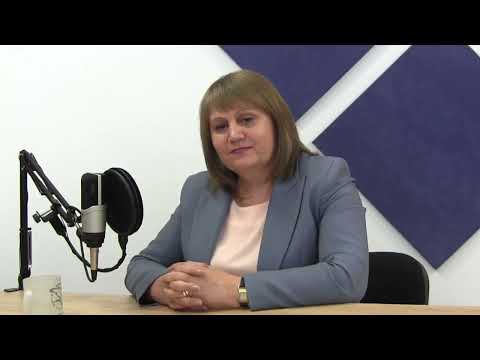
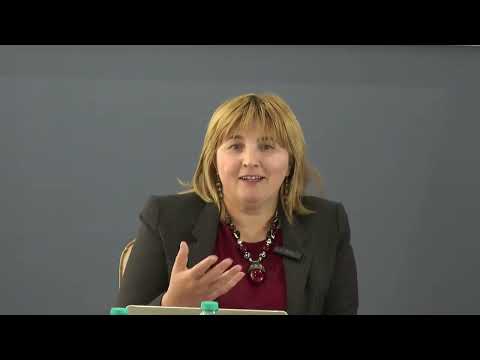
Daniela Morari: „We aim to open the remaining negotiating clusters as soon as possible.”
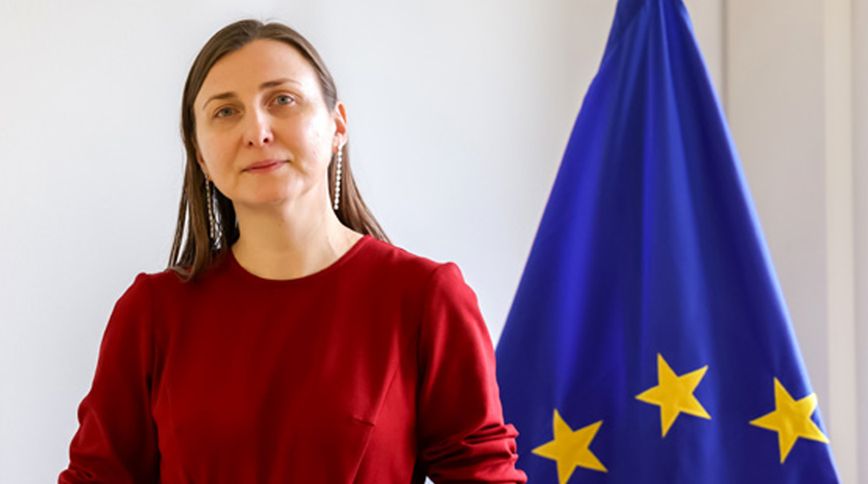
The Republic of Moldova is entering a decisive stage of its EU ac cession negotiations following the opening of Cluster 1 – “Funda mentals” on 15 June in Luxembourg. In an interview for the FES/APE Foreign Policy Bulletin, the Ambassador of the Republic of Moldova to the European Union, Ms Daniela Morari, discusses the significan ce of the upcoming negotiating clusters, the interim benchmarks, the merit-based approach to accession, the ambitious accession timeline, the disbursements under the EU Growth Plan for Moldova, attracting private investment, and the need for broad domestic consensus in the face of disinformation and external pressure. We also discussed how every step on Moldova’s path towards EU membership will depend both on the country’s ability to deliver reforms and on the unanimity of the EU Member States. We invite you to read the full interview:
Madam Ambassador, following the opening of the “Fundamentals” Cluster, what is the realistic timeline for opening the remaining five negotiating clusters? What key objectives does the Republic of Moldova need to achieve by the end of this year, and to what extent will this timeline depend on Moldova’s own performance as opposed to the political consensus among the EU’s 27 Member States?
The Republic of Moldova has opened accession negotiations under the “Fundamentals” Cluster. Both the European Commission and the Council of the European Union have also confirmed that our country is ready to open negotiations on the remaining clusters.
At present, the Moldovan authorities are engaged in discussions with the rotating Presidencies of the Council of the European Union – Cyprus and Ireland, which will assume the Presidency on 1 July – with a view to opening several additional clusters during July and, subsequently, all of the remaining ones.
In parallel, in line with the accession methodology, the Republic of Moldova must fulfil the interim benchmarks set out in the European Union’s Common Position for Chapters 23 and 24 of the “Fundamentals” Cluster.
Once the European Commission and the Council of the European Union confirm that these interim benchmarks have been met, the accession process will be able to move forward towards the provisional closure of the relevant negotiating chapters. These are the Republic of Moldova’s key priorities for the period ahead and until the end of this year.
“Fundamentals”: The Toughest Test for the State
The “Fundamentals” Cluster is the first to be opened and the last to be closed in the accession process. In your view, which are the three most vulnerable areas that could slow down the negotiations: judicial reform, the fight against corruption, or the capacity of the public administration? When assessing progress, will Brussels place greater emphasis on the adoption of legislation or on tangible results and the irreversible nature of the reforms?
It is no coincidence that the “Fundamentals” Cluster is the first to be opened and the last to be closed in the accession process. Nor is it a coincidence that it is the only cluster that includes interim benchmarks. The objective is to demonstrate the functionality and operational capacity of the institutions, ensuring that the Republic of Moldova is fully prepared for integration into the European Union by the time it becomes a Member State.
Progress is assessed on the basis of a broad set of indicators, including the so-called track record, which reflects the effective implementation of reforms. The assessment looks, for example, at how decisions are taken, the number of cases brought before the courts, and the procedural actions undertaken, with the emphasis placed on tangible results rather than solely on the adoption of legislation.
These criteria cover judicial reform and the fight against corruption, but from a much broader perspective than the institutional dimension alone. The focus is not only on the work of the specialised institutions or on the investigation of high-level corruption cases, but also on the state’s capacity to combat corruption across all sectors, including within the justice system, and to strengthen the transparency, efficiency and professionalism of public institutions.
Merit-Based Accession, Synchronisation with Ukraine and the Risk of Vetoes
European leaders have consistently stressed that the accession process will be based on the merits of each candidate country. Does this mean that the Republic of Moldova can, in practice, move forward independently of Ukraine once it fulfils the required conditions? How significant is the risk that Moldova’s technical progress could still be delayed by national vetoes, enlargement fatigue or other political considerations within the European Union?
Given that the Republic of Moldova submitted its application for EU membership following a similar step taken by Ukraine, many of the European Union’s decisions concerning the two countries were adopted during the same Council meetings. This explains the synchronisation of certain decision-making processes at the EU level. At the same time, the accession process and the current enlargement methodology are based on assessing the merits of each candidate country, while the closing benchmarks for each negotiating chapter are tailored to the specific realities of every country.
The accession process is not a competition in itself. Rather, it is a process of progressing from one stage to the next, towards full functionality, enabling each candidate country to demonstrate, through the reforms and transformations it delivers, that it is ready to become a fully-fledged Member State, fully aligned with the values and policies of the European Union.
Accordingly, when it comes to the implementation of reforms and the pace at which the Republic of Moldova and Ukraine will advance, what will matter most is the delivery of results against the agreed conditionalities. This will be the key indicator determining progress in the accession process.
The Republic of Moldova will be assessed on the basis of the results it delivers. Beyond the “homework” we have to complete as part of the accession process and the efforts devoted to implementing reforms, it is also important to highlight the recommendations contained in the European Commission’s Enlargement Package. These, too, serve as important indicators for measuring where we stand in the accession process.
There are therefore clear indicators that allow us to demonstrate that we have earned the right to move forward in the accession negotiations.
EU Accession in 2028 or After 2030?
Do you believe that the Republic of Moldova could realistically join the European Union by 2028, or is an accession timeline after 2030 more likely? Could Moldova become part of this round of enlargement by 2028, alongside Montenegro, for example?
This has also been confirmed by the European Commission, which has described it as an ambitious yet realistic timeline. Everything will depend on how successfully we are able to move forward through the procedural steps at the European Union level. For this reason, in all our discussions – at the political, technical and institutional levels –with the European Commission, the Council and the Member States, we are making every effort to advance these procedural steps. As I mentioned earlier, our immediate objective is to open negotiations on all the remaining clusters and to make progress on the interim benchmarks under the “Fundamentals” Cluster, which will allow us to begin the provisional closure of individual negotiating chapters.
The Republic of Moldova is already making good progress in several areas. We believe that, as soon as we receive the green light confirming the fulfilment of the interim benchmarks, we will be able to begin provisionally closing a number of negotiating chapters. We have achieved good results in the digital sector, as well as in education and research. Overall, we have identified around ten chapters where, against the closing benchmarks, we have already made solid progress.
Over the coming period, we intend to present a substantial report on these achievements, and we hope that the European Commission will share this assessment, allowing us to seek the approval of the Member States for the provisional closure of those negotiating chapters.
The accession process involves numerous procedural steps, each with its own level of complexity. However, as you rightly pointed out, the most important element remains the need for unanimity among all Member States.
It is difficult to predict how long it will take to achieve such unanimity. Nevertheless, we are operating in a political environment that is favourable to enlargement. The European Commission considers enlargement to be one of the priorities of its current mandate, and the European Parliament shares this commitment. Likewise, the conclusions of the latest European Council reaffirm that enlargement remains a strategic priority, even as the European Union faces other challenges and priorities. We are counting on maintaining this political support, without which the accession process cannot move forward.
The Growth Plan: Reform Delivery as the Key to EU Funding
The EU Growth Plan for the Republic of Moldova makes available up to Euro 1.9 billion, of which approximately Euro 504 million has already been disbursed. Which specific reforms are linked to the disbursement of the upcoming tranches, and what happens if some of the required conditions are met with a delay? How can the authorities ensure that these funds translate into tangible benefits for the economy and for citizens, rather than simply being disbursed and reported?
The EU Growth Plan for the Republic of Moldova is closely linked to the Reform Agenda, and the Republic of Moldova has committed to a clearly defined set of reforms in order to qualify for the disbursement of EU funding.
The Republic of Moldova has one of the highest implementation, disbursement and absorption rates under the Growth Plan. For the second tranche, we achieved a 93 percent implementation rate of the requirements set by the European Union. Even when compared with the Western Balkan countries, which are implementing similar Growth Plans, or with Ukraine under its Ukraine Facility, the Republic of Moldova stands out for its high level of implementation.
30 June is the deadline for fulfilling the conditions related to the third tranche of the Growth Plan. We expect to maintain this high implementation rate and to submit, by mid-July, our report on the fulfilment of the agreed conditions. The report will then be assessed by the European Commission, which will determine whether the relevant requirements have been met.
For the Republic of Moldova, delivering the agreed reforms is a priority in order to secure the disbursement and absorption of these funds. At the same time, beyond its reform component, the Growth Plan also includes an investment component, which is equally important for the country’s development.
European Investment: From Announcements to Capital on the Ground
At the EU-Moldova Investment Conference, held in Chișinău in early June and attended by the European Commissioner for Enlargement, Marta Kos, projects worth up to Euro 641 million were announced. How much of this represents firm private investment, and how much is, for the time being, financing, guarantees or expressions of interest? When is capital expected to effectively enter the economy, how many jobs could be created, and what reforms are investors calling for in the areas of justice, taxation, public procurement and energy security?
The conference was important because it introduced a new dimension to the EU Growth Plan. Alongside the traditional investments in infrastructure and development projects, particular emphasis was placed on the involvement of the private sector.
Last autumn, the European Commission launched a call for proposals targeting the private sector. The call was implemented through three rounds and attracted applications from companies operating in a range of sectors, particularly in the energy sector.
During the recent conference, the companies selected under that call for proposals were announced. They are now ready to invest in the Republic of Moldova, benefiting from additional support provided by the European Commission to help develop strategic sectors.
Beyond investments in the energy sector, foreign companies have also expressed interest in investing in water infrastructure, logistics, agriculture and digitalisation.
These are priority sectors where there is both a clear need for further development and growing interest from companies in the European Union Member States and the Republic of Moldova to expand their investments and operational activities.
What Matters Most to Investors: Justice, Bureaucracy, Energy and Security
We are sure that, in Brussels, you have frequent discussions with potential foreign investors interested in the Republic of Moldova. We know that you are often asked about judicial reform, taxation and energy security. When potential investors ask you about the Republic of Moldova and consider entering the Moldovan market, how important are these issues in their investment decisions?
Yes, these aspects matter a great deal. Investors pay close attention to developments in the justice sector, as well as to indicators related to the business environment. They are interested in the level of bureaucracy and the efficiency of administrative procedures, including how long it takes to obtain permits, licences and other approvals required to carry out business activities.
Another important consideration is the situation in the energy sector and developments in this area. For example, the growing share of renewable energy is viewed positively by private investors, both as an opportunity to develop businesses in this sector and to implement projects based on green energy.
Potential investors are also interested in the country’s resilience and security. They ask how the Republic of Moldova has managed to cope with the challenges of recent years and seek to gain a better understanding of the realities and the broader context in which the country operates.
Domestic Consensus and Resilience in the Face of Foreign Interference
EU accession cannot remain solely the project of one government or of a parliamentary majority. How can Chișinău build a broad national consensus that includes the opposition, civil society, local authorities and the business community, so that the reforms can withstand political change? And to what extent could Russian disinformation and interference undermine public support for EU accession and slow down the pace of European integration?
We have all seen how these challenges can distort reality, the harm they can cause, and how deeply they can take root in people’s hearts and minds.
We have also seen how much effort it takes to explain, to inform, and to restore an objective, fact-based understanding of reality. I believe these challenges are still very much present. We have learned important lessons about the need to remain resilient and vigilant, and about the importance of understanding the new ways in which we are being challenged and targeted by information attacks.
At the same time, it is essential that all segments of society are engaged in this process. Accession to the European Union is a complex undertaking that cannot be delivered by a single institution or a single actor. It is a transformative process that requires the involvement of society as a whole.
From my discussions in Brussels with delegations and teams from the Republic of Moldova –whether representatives of civil society, members of Parliament, local public authorities or the business community – I see the same aspiration: better living standards, a higher quality of life, greater opportunities for private sector development and, ultimately, stronger economic growth.
These objectives are shared by everyone. The key is to find ways for each of us to contribute to this common effort and to make the most of the opportunities that the European Union accession process offers.
Thank you!

Textele de pe pagina web a Centrului de Investigații Jurnalistice www.anticoruptie.md sunt realizate de jurnaliști, cu respectarea normelor deontologice și sunt protejate de dreptul de autor. Preluarea textelor știrilor și a investigațiilor jurnalistice se realizează în limita maximă de 500 de semne. În mod obligatoriu, în cazul paginilor web (portaluri, agenții, instituţii media sau bloguri) trebuie indicat şi linkul direct la articolul preluat de pe www.anticoruptie.md în primul alineat, iar în cazul posturilor de radio și TV – se citează obligatoriu sursa. Preluarea integrală a textelor se poate realiza doar în condiţiile unui acord prealabil semnat cu Centrul de Investigații Jurnalistice.
Previous articles





Subscribe