

Denis Cenusa: Vasile Tofan's Government: Old Problems on the Road to the European Union
Analysis by Denis Cenusa, associate expert with Expert-Grup for the FES/APE Foreign Policy Bulletin
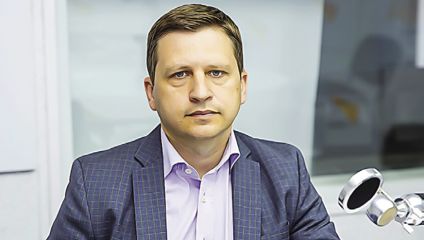
The inauguration of the new government in Chișinău, led by investment manager Vasile Tofan, comes almost ten months after the parliamentary elections of September 2025. His appointment as Prime Minister had been anticipated since last year. However, at that time, President Maia Sandu entrusted the mandate to Alexandru Munteanu, whose government remained in office for eight months.
Like his predecessor, Vasile Tofan comes from the financial sector. For approximately 15 years, he worked at the investment company Horizon Capital before accepting the office of Prime Minister in July 2026.
With the support of 53 deputies from the parliamentary majority, Tofan became the fourth Prime Minister during the five years of governance by the Party of Action and Solidarity (PAS). Although he is not a member of PAS and has no direct political affiliation with the party, in 2025 he co-founded the civic movement Europe 2028, whose message on the Republic of Moldova's accession to the European Union largely overlapped with the central theme of PAS's electoral campaign.
Overall, Vasile Tofan opted to retain the current composition of the Cabinet, with changes affecting only the portfolios of Agriculture, Finance and Health. According to information circulating in the public domain, one of the reasons why he chose to keep almost the entire ministerial team was that he had reportedly been given the possibility to make subsequent changes to the composition of the Government, depending on the ministers' performance.
From Milei to PAS-Governed Moldova
A few days before his name began circulating publicly as a candidate for the office of Prime Minister, Vasile Tofan presented a package of measures which, in his view, would help address the Republic of Moldova's economic difficulties. Among the proposals were a 30% reduction in the size of the public administration, a cap on salaries in the public sector, the partial privatization of state-owned enterprises, and a reform of local public administration through the establishment of 40 municipalities.
Some of these proposals resemble the reform agenda on which economist Javier Milei won Argentina's 2023 presidential election. After taking office, Milei implemented a series of far reaching measures, including reducing the number of ministries from 18 to 9, eliminating subsidies for energy and transport, liberalizing a number of regulated prices, and opening the way for the privatization of state-owned enterprises.
In Argentina, these reforms were presented as an attempt to dismantle the economic model that had taken shape under the Peronist governments of the previous 15 years, against the backdrop of a prolonged economic crisis. In the Republic of Moldova, by contrast, Vasile Tofan assumed the office of Prime Minister after five years of rule by the Party of Action and Solidarity (PAS) and President Maia Sandu. In this context, his government programme, entitled A European Economy, an Efficient State, aims to address the economic and social challenges that have accumulated over this period while accelerating the country's economic reform and modernization.
Some of the economic difficulties facing the Republic of Moldova stem from the regional geopolitical environment. Russia's military aggression against Ukraine, Ukrainian drone attacks on Russian oil infrastructure, and tensions in the Middle East, including disruptions in the Strait of Hormuz, have heightened economic uncertainty and affected energy and trade markets.
Other challenges, including those related to the budget deficit, are associated with shortcomings in the governance and management of the public sector. In recent months, these shortcomings have been reflected in the public debate surrounding the situation at MoldAtsa and the level of certain public sector salaries, which have been widely regarded as disproportionately high compared with the country's average wage.
The scale of these controversies prompted the new Prime Minister to propose a cap on public sector salaries, with the aim of sending a message of social fairness and reducing pressure on the state budget. To this end, the Secretary General of the Government, Alexei Buzu, was tasked with presenting concrete proposals by the end of July 2026, while the Prime Minister assumed responsibility for overseeing the process.
In a context where more than one-third of the population lives below the poverty line and economic growth remains modest, the issue of social equity has become increasingly prominent in the public debate. According to public opinion polls, 64% of citizens believe that the Republic of Moldova is moving in the wrong direction. Against this backdrop, the opposition is in a stronger position to mobilize public discontent, including through antigovernment protests over natural gas tariffs, even at the very beginning of the Tofan Government's term in office.
Tofan's Programme: An Old Ambition, Semi-Radical Solutions
The government programme on the basis of which Vasile Tofan was confirmed in office rests on two main pillars. The first is the construction of an efficient state capable of improving living standards, while the second focuses on restarting the economy and advancing the country's accession to the European Union.
The section on economic recovery outlines policies aimed at preventing excessive regulation and unannounced inspections of businesses, promoting digitalization and industrialization, attracting private investment, reforming the tax system, and making more efficient use of state assets. The government also plans to invest in energy interconnections and energy efficiency in order to reduce production costs. However, a major challenge remains the limited transparency surrounding natural gas procurement, as well as the costly management of state-owned enterprises in the energy sector. Opposition proposals to grant greater access to the natural gas procurement process and to reduce administrative costs at Energocom and Moldovagaz S.A. could contribute to greater stability in energy tariffs, with positive spillover effects for the broader economy. At the same time, to strengthen the country's resilience to energy shocks, the new government has proposed quarterly tariff reviews, allowing prices to be adjusted in line with developments in the energy market.
The second key dimension that will test the effectiveness of Vasile Tofan's government is the country's accession process to the European Union (EU). The government has set itself two ambitious objectives: to conclude the accession negotiations and sign the Accession Treaty by the end of 2028, and to achieve full EU membership by 2030. However, the government programme pays comparatively little attention to two issues that are likely to have a decisive impact on the Republic of Moldova's European path.
First, the country's European ambitions face a major geopolitical challenge: the linkage of Moldova's accession process with that of Ukraine. Unlike the Republic of Moldova, Ukraine's accession path is shaped by a number of sensitive issues, including the protection of national minority rights (in relation to Hungary and, potentially, Romania should the AUR party come to power following early elections), differing interpretations of historical events (particularly with Poland), and concerns about the impact of enlargement on the agricultural sector (notably in France, Spain, Poland, and other member states).
Although decoupling Moldova's accession process from Ukraine's could allow all negotiating clusters to be opened more rapidly, Chișinău will nevertheless have to adopt and make public its negotiating positions on sensitive issues, such as the rules governing the acquisition of agricultural land by European Union citizens.
Another challenge the government will face is the management of the Transnistrian conflict. Failure to resolve the conflict could delay the country's accession to the European Union, even if, hypothetically, all negotiating chapters were to be provisionally closed.
Against this backdrop, the government proposes to operationalize the Convergence Fund for reintegration policies. The legislation establishing the Fund is expected to enter into force in August 2026, while its effectiveness will depend on both allocations from the state budget and external grant funding.
Even if the Fund becomes operational, the prospects for the reintegration process will also depend on the willingness of the authorities in Tiraspol to engage. So far, the de facto administration has opposed the initiative, describing it as a unilateral measure.
At the same time, the European Union has remained cautious about enlarging to include countries with unresolved territorial conflicts, with the notable exception of Cyprus.
What Lies Ahead?
Vasile Tofan's government has less than two years to restore the image of the Party of Action and Solidarity (PAS) ahead of the 2027 local elections and the 2028 presidential election.
During this period, pressure from the opposition is likely to intensify, driven by public dissatisfaction with the perceived lack of meritocracy in the public sector, energy tariffs, administrative-territorial reform, and fiscal reform, which could generate inflationary pressures and impose additional costs on businesses. At the same time, the government is facing the combined effects of several overlapping crises – economic, hydrological, energy-related, and a crisis of public confidence in governance.
This environment will test the Tofan Government's ability to revive the economy and generate the resources needed to restore the country's social contract, which has come under strain since 2022. Failure to do so could lead to an escalation of anti-government protests, potentially becoming the opposition's main source of electoral mobilization, whether in the regular election cycle or in the event of early elections should the situation deteriorate further.
On the other hand, tangible progress in the country's reintegration process and greater stability in Gagauzia could strengthen public confidence in the Tofan Government. Nevertheless, the political benefits of such achievements are likely to prove short-lived unless addressing the country's socioeconomic challenges becomes an immediate priority on the government's agenda.

Textele de pe pagina web a Centrului de Investigații Jurnalistice www.anticoruptie.md sunt realizate de jurnaliști, cu respectarea normelor deontologice și sunt protejate de dreptul de autor. Preluarea textelor știrilor și a investigațiilor jurnalistice se realizează în limita maximă de 500 de semne. În mod obligatoriu, în cazul paginilor web (portaluri, agenții, instituţii media sau bloguri) trebuie indicat şi linkul direct la articolul preluat de pe www.anticoruptie.md în primul alineat, iar în cazul posturilor de radio și TV – se citează obligatoriu sursa. Preluarea integrală a textelor se poate realiza doar în condiţiile unui acord prealabil semnat cu Centrul de Investigații Jurnalistice.
Previous articles






Subscribe