



Olga Ursu: The National Alternative Movement primarily supports the concept of municipalization

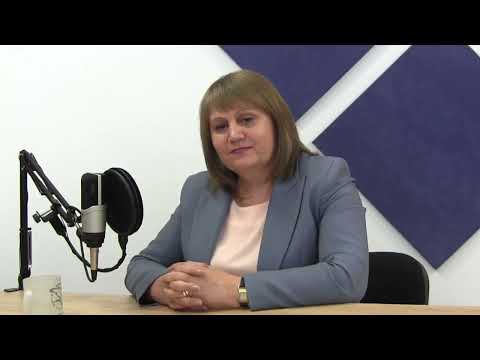
MP of the Party Movement Alternative National (MAN), Olga Ursu, gave an interview for the FES/APE Foreign Policy Bulletin, in which we discussed the vision of the opposition party she represents regarding how the reform of local public administration should be de signed. We addressed the models applied in other European states and what would be the most suitable pattern that the Re public of Moldova should follow within this crucial reform, also requested by the EU. We invite you to read the full interview in the lines below:
- Ms. Ursu, the administrative-territorial reform has returned to the Government’s agenda. How do you assess this initiative from the perspective of MAN—is it a necessary reform or one that is being politically rushed?
- From my point of view, as someone working in local public administration and taking into account the constant dialogue, including with the Congress of Local Authorities from Moldova (CALM), I consider that the reform of local public administration is strictly necessary and inevitable.
Undoubtedly, it is also necessary from the perspective of EU accession. The current system is far too fragmented for the size of the population we have and, unfortunately, inefficient in certain rural areas where the population is very small.
We have municipalities with limited fiscal and administrative capacities, with an extremely narrow tax base. All of this, however, is the consequence of how the system has been managed in recent years—not only in the last 6–7 years, but even over the past 15 years—a period during which many services have been centralized, while fiscal decentralization has not taken place to the necessary extent.
For this reason, the MAN Party also supports this reform. However, the essential question is not when we carry it out, but how it will be implemented.
We have analyzed the concept that has been presented, one that was launched relatively late. At present, there is no final document that could be submitted to Parliament for approval. What we have is, rather, a well-structured analysis—a diagnosis. We therefore have the diagnosis, but not the treatment.
In this context, the question is whether we are talking about a genuine structural reform or merely a readjustment, as the presented concept seems to suggest.
Valid arguments, but partial
- Reducing the number of districts and territorial re organization represent one of the central ideas of the reform. Do you consider that this model is suitable for the Republic of Moldova?
- The Government frequently invokes the argument that this reorganization of local public administration is necessary in the context of European integration. We are told that, in one way or another, the EU requires the Republic of Moldova to carry out this reform, including in order to be able to absorb more efficiently the European funds that will follow.
This argument is valid, but only partially. I believe that the problem of the Republic of Moldova is not limited to the size of the administrative-territorial units, but, to a very large extent, to the lack of genuine fiscal decentralization—an issue we raise every time.
The Alternative National Movement, as well as myself personally, rather support the concept of municipalization, a topic that is being discussed more and more frequently. It is a well-argued position, also supported by the Congress of Local Authorities from Moldova (CALM) and by several experts, given that districts represent an outdated structure.
It is not only about terminology, although there have been numerous discussions on this aspect as well. As long as districts are maintained as a structure, they will continue to act as intermediaries redistributing resources, as is happening at present, often on political grounds.
In my view, a proper, genuine, and effective reform can only be achieved through municipalization, not by preserving the existing structure. Municipalization implies eliminating the intermediate tier—second-level local public administration—and strengthening towns through the integration of adjacent territories.
- Is there a risk that this reform could lead to an excessive centralization of power in Chișinău? In your opinion, what should a balanced model between local autonomy and administrative efficiency look like?
- Certainly, the risk of excessive centralization is one of the most widely discussed aspects in the context of the local public administration reform currently proposed by the Government. However, it is not automatic that a larger administrative-territorial unit will also benefit from greater financial autonomy.
As long as these newly amalgamated, territorially expanded units do not also have sufficient resources to carry out their responsibilities, the reform will not produce the expected effects. In such a case, it risks being limited to mere territorial—and possibly political—resizing.
Moreover, the recent amendments to the law on amalgamation—particularly the removal of the proximity criterion and the requirement for a qualified vote of local councils over a longer period—can be interpreted as pointing rather toward a political reshaping. In this sense, there is a risk of increased centralization, including along political lines, around the current governing power.
Older promises
- The authorities are promoting the concept of voluntary amalgamation. How realistic is this under the current conditions? Do you consider that financial incentives are sufficient to convince small municipalities to accept this reform?
- The Government has been promoting this voluntary amalgamation not just recently, but for approximately three years. Throughout this period, various financial incentives have been announced—investments, grants, technical support, and others.
However, if we look at the reality on the ground, we see that the results are very limited. Out of the 898 local public authorities in the Republic of Moldova, only two clusters have successfully gone through the voluntary amalgamation process.
This suggests that the mechanism has not worked. Either the financial incentives have been insufficient, or there have been other issues. In my view, beyond the lack of resources—in a context where investment needs in infrastructure are very high (roads, lighting, water supply and sewerage networks)—there has also been a lack of long-term predictability of these investments.
Localities are promised investments in the first years after amalgamation, but there is no clarity regarding their continuity and sustainability in the long term. This aspect is essential and explains why the trust of local authorities in this process remains fragile.
At the same time, we hear that, if voluntary amalgamation does not take place, the Government is considering a “normative amalgamation.” A term that sounds technical, but which, in essence, can be interpreted as a form of forced, top-down amalgamation.
The message conveyed to localities is that, in the absence of voluntary amalgamation, access to European funds and state investments could be limited. This has, in fact, been one of the factors that led some localities to enter the process.
At the same time, there are numerous signals regarding how this process is being carried out. In some cases, mayors are not involved, and, according to positions expressed including by the Congress of Local Authorities from Moldova (CALM), the voting threshold required for decision-making has been reduced—from a two-thirds majority to a simple majority.
I believe that any territorial change should, first and foremost, reflect the will of the citizens. At a minimum, extensive consultations are needed, and the most appropriate solution would be to organize a referendum, either local or national.
In this logic, MAN continues to support the organization of a referendum, because not only a majority of councillors should decide, but the citizens themselves. They are the ones who must decide whether they want amalgamation, what impact on local identity they are willing to accept, and what expectations they have in terms of investment and development.
In this context, the amendments recently adopted in Parli ament raise serious questions regarding the direction and fairness of the process.
Examples from other countries
- The reform is presented as a solution for improving the efficiency of public spending. Do you consider that it will generate real savings or rather a redistribution of resources? Will the new administrative entities be able to attract European funds without the support of the central authorities?
- Even the Government has acknowledged that the reform will not generate savings in the short term; on the contrary, it will lead to increased expenditures in the initial phase.
As far as I am concerned, the argument that merged municipalities will automatically have a better capacity to access European funds is not entirely convincing. We have the example of Romania, where local authorities did not merge in order to access funds, but rather strengthened their institutional capacities.
Local authorities have hired experts for project development, outsourced consultancy services, and formed partnerships or clusters to jointly access European funds.
Therefore, any potential savings may arise only to the extent that administrative overlaps are eliminated—and here the discussion returns to the need to abandon outdated structures such as districts.
For the reform to be effective, three elements are essential: (1) genuine fiscal decentralization; (2) delegation of responsibilities accompanied by the necessary financial resources; and (3) strengthening institutional capacities.
A concrete example relates to the remuneration of staff involved in managing externally funded projects. Starting this year, the salary bonus has been limited to 50%, compared to 75% in previous years. For a young specialist in local public administration, this aspect is essential, as it directly affects the attractiveness of these positions.
In theory, larger administrative entities could have easier access to European funds. In practice, however, without internal institutional capacity or specialized external support, this remains difficult to achieve. Territorial expansion, in itself, does not solve the underlying problem.
Risk of politicization
- The reform is being prepared in a pre-election year. Do you believe there is a political stake behind this process?
- When such reforms are initiated on the eve of elections or in an electoral year, they naturally raise a number of questions.
I believe that reforms of this kind must go beyond electoral cycles. They should be planned and implemented over the longer term and, most importantly, benefit from broad consensus. This is because we aim for a reform that is fair, genuine, and irreversible. It is an essential reform for the administrations of the Republic of Moldova, and its objective should unequivocally be its success.
The success or failure of such a reform depends not only on the idea itself, but especially on how it is implemented. For this reason, it is important that it enjoys broad support and is carried out properly. In the absence of certainty regarding the optimal way of implementation, it would also be useful to pilot certain solutions before scaling them up at the national level.
- The Government links this reform to the European path. Is this connection justified, or is it rather a political argument?
- The Government tends to associate almost every reform, amendment, or legislative initiative with the European path. However, the citizens of the Republic of Moldova have already expressed their choice in this regard, including through the referendum on European integration.
As for the absorption of funds, this depends, first and foremost, on the capacity of local authorities. It is not necessarily true that a larger administrative unit will access funds more easily. If we look at the funding directions discussed, including at the level of the European Commission, these are, in the next EU budget cycle, largely oriented toward central authorities.
Therefore, there is also a trend toward centralization at the European level. In my view, this is a debatable approach, as local authorities have the capacity to implement projects more quickly and more efficiently.
As long as local public administrations do not benefit from direct funding, but rather receive it through central authorities, there is a risk of politicization of investments and delays in implementation. By contrast, direct funding would contribute to depoliticizing allocations and would allow resources to be directed precisely where they are needed.
Mayors and local councillors are the ones who best understand the needs of their communities. In this sense, pro jects designed and implemented directly at the local level could respond more adequately to these needs compared to centralized programmes, such as “European Village.”
Sound foundations for the reform
- If the reform is implemented in its current form, do you consider that it will contribute to strengthening local public administration, or, on the contrary, does it risk generating new structural problems?
- If the reform is limited merely to changing the territorial boundaries of localities, its effects will be negligible, and its implementation risks not being properly carried through to completion.
The essential pillars of a genuine reform are decentralization, the delegation of competences, increasing the own revenues of local public administrations—not only those derived from transfers—as well as digitalization and the development of integrated services.
The objective should be to bring public services closer to the citizen. In its current form, however, the reform seems rather to move these services further away, to diminish the role of local public administrations, and to continue excessive centralization. In essence, we are dealing with a resizing of centralization, not with a genuine reform.
- Thank you!

Textele de pe pagina web a Centrului de Investigații Jurnalistice www.anticoruptie.md sunt realizate de jurnaliști, cu respectarea normelor deontologice și sunt protejate de dreptul de autor. Preluarea textelor știrilor și a investigațiilor jurnalistice se realizează în limita maximă de 500 de semne. În mod obligatoriu, în cazul paginilor web (portaluri, agenții, instituţii media sau bloguri) trebuie indicat şi linkul direct la articolul preluat de pe www.anticoruptie.md în primul alineat, iar în cazul posturilor de radio și TV – se citează obligatoriu sursa. Preluarea integrală a textelor se poate realiza doar în condiţiile unui acord prealabil semnat cu Centrul de Investigații Jurnalistice.
Previous articles






Subscribe