

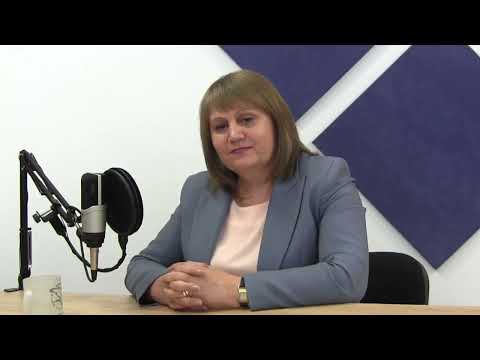
Alexandru Bujorean: It would be fair if EU money went to developing public infrastructure and empowering local public administrations
.jpg)
Alexandru Bujorean, leader of the Coalition of the Towns and Municipalities League and cofounder of the “Together” bloc, gave an interview in which we discussed the European future of the Republic of Moldova. We talked about the security threats to Moldova in the context of Russia’s military invasion of Ukraine and the possibility of a just peace. We also discussed about the unity issue dof pro-European political forces three years after the submission of the EU membership application and his vision of Moldova’s multisectoral development with the help of European funds. Read the full interview, published in the Foreign Policy Association and FriedrichEbert-Stiftung Newsletter, with the pro-European politician and Mayor of Leova, Alexandru Bujorean.
In general, how do you see this process of the European path of Moldova since the signing of the membership application on 3 March 2022 and up to now? Have the Chisinau authorities been able to make the most of this historic opportunity?
First of all, back in 2014, when the Association Agreement with the EU was signed, this in itself was a confirmation of the efforts made by our country. Obtaining the status of candidate country comes on the one hand as a result of a constant effort made by our country and government institutions. Let us not forget the geopolitical context. This unjust war on our borders has meant, on the one hand, the opportunity to move forward on the path of European integration and, on the other hand, to obtain a partial guarantee that, being among the democratic and prosperous states, such as those of the European Union, we have a certainty that we will not be on the list of countries that are a target for the Russian Federation.
But we have a lot of work to do, because those conditionalities that we have to fulfil in the negotiation process, starting from the reform of justice and public administration and other structural reforms, are extremely important. There are certain shortcomings in this regard and there is room for improvement.
Benefits of EU membership
What could perhaps have been done better in your view and what would have been the best policy approach from the current government in order to continue the European course?
The accession process itself is a process of negotiation, and at the basis of this process are both Community and national interests of the Republic of Moldova. The rules of accession and becoming part of the EU, as well as the way we will operate in the next ten years within the Union, will have a direct impact on the Moldovan citizens, which is why it is very important who and how negotiates. Above all, it must be done in the interests of the Republic of Moldova.
On the one hand, it is important to see what kind of aid will be felt in short and medium terms, because we see a worrying level of scepticism not only in the Republic of Moldova, but also in the European Union.
On the other hand, from the moment the Association Agreement was signed until the Republic of Moldova obtained the status of candidate country, it has had only to gain from this process. Numerous funds have come into the country, including the latest ones announced by the European Commission and the European Parliament, amounting to EUR 1.9 billion, which will go towards Moldova’s economic recovery and including the implementation of several projects of major importance. Whether we are talking about infrastructure, public policies and services at local and regional level, or, last but not least, about ensuring independence in relation to the energy problems and crises which our country, the region and the whole world have been going through in recent years.
Fair justice attracts economic development
The justice sector remains a sensitive one and I would ask you how do you see the progress made so far and what needs to be done better in this vital sector of reforms for EU accession?
Justice reform is not only in the national interest or in the interest of Moldovan citizens. It is also about predictability, including for the business environment and foreign investors. No foreign investor will come to a country in which the investments may be subject to attacks or even dispossession on the basis of court rulings, as has unfortunately happened in Moldova.
I think the system is still sufficiently resistant to judicial reform. However, it was wrong from the outset to characterize the whole justice system as corrupt and biased. We also have honest prosecutors and judges in this country, but unfortunately, they all have to go through the same evaluation procedures, even though many of them have proven their integrity and professionalism over time.
From the outset, a very clear division should have been made on the basis of certain indicators, for example, the number of cases and convictions, including ECtHR convictions, that our country has had due to decisions issued by Moldovan magistrates. I believe that this very clear division between people who have been sinful in their professional career and those who have shown good intentions should have been made from the outset. This was not done, and I think that this is where it went wrong.
On the other hand, certain models that have worked in other countries have proved less effective here. And this has sparked outrage in the system, including from judges and prosecutors who over time have proved to be fair. This is where I think the biggest mistake has been made.
However, the process of vetting and pre-vetting must inevitably continue, once we are engaged in this process, and more efforts must be made, commensurate with the support our country enjoys. The government has benefited from openness on the part of the EU, including by providing resources and technical, methodological and other support.
Solutions for smart investments with EU money
The Republic of Moldova will receive 1.9 billion in development funds from the EU over the next three years. What are the priority areas where this money should be invested in order to see an increase in living standards for citizens?
I work in local public administration. I am in daily contact with citizens, and I can say with certainty that it would be right, as was the practice in other countries at the stage when they obtained candidate country status, for some of these funds to be allotted for local and regional development. It would be right if EU money were to go towards developing public infrastructure, building the capacity of local public administrations, and increasing the quality of public services at local level.
This would allow for immediate impact. But there are strategic areas that should not be left behind. Unfortunately, due to certain decisions taken overseas, the Republic of Moldova has lost substantial US support in the energy sector. We are talking here about the interconnection of the national network with the European network in Romania, namely the VulcanestiChisinau network. We are talking about over 300 million dollars.
I think that it would be wise to compensate these sources so that at least next year we can become independent in this respect, to have access to the alternative market for the procurement of energy resources. Firstly, I am referring here to electricity, because today we continue to be dependent both on the Cuciurgani power station and on the entire energy system built during the Soviet period, the latter being designed to keep the former union republics dependent on Moscow.
Last but not least, we should think about programmes for migrants, which would boost economic development, including local economic development, so that we become attractive to our fellow countrymen working abroad and I believe that every one of them would like to return home in the near or distant future. But the question is what to return to now?
I therefore believe that developing the local economy, in particular by creating the conditions for attracting foreign investors, would be a priority. It is worth noting that this objective is reflected in the substantial financial support generously provided by the European Union.
Gloomy political scenarios
Moldovan society is very polarized and this was seen in last year’s referendum. There is also this scenario in which pro-European forces cannot form a majority. What would happen in such a scenario with all these achievements so far?
I think it would be a tragedy if the forces hostile to Moldova’s European path were to accumulate a parliamentary majority in the next Parliament. It would be dramatic, but not tragic, because the Republic of Moldova has ended up in a rather complicated economic situation, and today we are practically dependent on the support which the European Union and external partners are giving us.
That is why I am far from thinking that if the Russian Federation, during the period when it controlled everything in the Republic of Moldova, did not offer a single penny for public infrastructure, for modernizing educational institutions, for training small and medium-sized enterprises, it would do so now, even if it had interlocutors at the helm in Moldova.
I tend to believe that the maturity and wisdom of the pro-European political forces will prevail, as we see that on the pro-Russian left-wing segment there are several political projects aimed at absorbing the votes from the centre-left.
On the other hand, on the right wing, we continue to see a furious attempt to monopolize the European course and to favour a single political party. We can see from all the polls that this party has no chance of winning a majority in Parliament on its own.
Therefore, my wish and my appeal would be to discuss it as much as possible, to find formulas through which voters disappointed by certain mistakes committed by the current government, but ultimately caused by the multiple crises that the country has gone through, would have an opportunity to vote for other genuine pro-European parties. Such parties must not be obstructed. On the contrary, they must be helped and stimulated, including through access to the media, to get their message across to voters.
Lack of cohesion among pro-European parties
What is needed from pro-European political parties at the moment to join and secure a future new majority? Is there a consensus at the moment among these pro-European political parties?
If on the pro-Russian left of the political spectrum we see a coordination of actions, on the pro-European side, unfortunately, we see a struggle which is a competitive one. Although it is not an ideological struggle, these few genuinely pro-European parties do not have institutionalized communication among themselves as the political opponents of the pro-European parties affiliated to the oligarchic groups and the Kremlin seem to have.
The biggest problem and challenge, in my view, is to send a very clear message to all citizens of the Republic of Moldova that this is the last chance we still have, that the European integration train is still at the station of the Republic of Moldova, and if we miss it, we risk not having the opportunity to integrate our country into the European value space. This is why the stakes are higher than the interests of the parties, the interests of certain individuals and even the comfort of certain officials.
There is a need to unite forces, a message of unification, unity and consolidation of everything that is pro-European. A common message is needed for everything that means uncompromising and everything that means capacity and professionalism in the act of government.
Dangers and obstacles
What would it mean if pro-Russian forces come to power this autumn? Is there a danger of Moldova turning into a new Belarus, or perhaps a more attenuated form like Georgia?
The Georgian scenario is unfortunately as real as it can be for the Republic of Moldova. In Tbilisi, too, at a certain stage, a pro-Russian majority got in the Georgian Parliament, and Georgia was somehow left to be led by a pro-European president, but with limited powers, as is the case here.
And for this not to happen, we need to send a very clear message to citizens who need to look beyond the political battles and be guided by the national interest when they go to the voting booth.
This is what the pro-European parties must do. I want to believe that this unjust war will be over soon and there will be a just peace for Ukraine. This means that Ukraine will stay where it is, the Republic of Moldova will stay where it is. Russia’s influence will no longer be so pronounced, especially as we can see that the left bank of the Dniester can no longer be supplied with energy without the support of the Republic of Moldova, Ukraine and the European partners.
That is why it is imperative for Tiraspol to communicate constructively, first and foremost with decision-makers in Chisinau and Brussels. This situation can be used as a tool for communication and negotiation, or perhaps even for resolving this conflict.
Of course, Moscow will continue to have imperialist ambitions and will stick to them. This is happening not only in the Republic of Moldova, but also in other countries, but we believe in our European partners, we believe that the European Union will remain united in the face of these challenges and will stand by us, and just as it has not left us before, it will not leave us alone in the face of Russia’s interests.
Thank you!

Textele de pe pagina web a Centrului de Investigații Jurnalistice www.anticoruptie.md sunt realizate de jurnaliști, cu respectarea normelor deontologice și sunt protejate de dreptul de autor. Preluarea textelor știrilor și a investigațiilor jurnalistice se realizează în limita maximă de 500 de semne. În mod obligatoriu, în cazul paginilor web (portaluri, agenții, instituţii media sau bloguri) trebuie indicat şi linkul direct la articolul preluat de pe www.anticoruptie.md în primul alineat, iar în cazul posturilor de radio și TV – se citează obligatoriu sursa. Preluarea integrală a textelor se poate realiza doar în condiţiile unui acord prealabil semnat cu Centrul de Investigații Jurnalistice.
Previous articles





Subscribe