


Who dribbles the law in the file of the National Stadium?
.jpg)
The National Stadium situated in the centre of the capital city, where the most important football matches were played in former times, is derelict for almost ten years. In 2006, the Communist governance decided to renovate the sports arena and, without conducting any tender, the company Basconslux was designated to do the demolition, the costs of the works at that stage being estimated at eight million lei. Nevertheless, this company, that was the winner in a number of public tenders, was not paid, although it performed the works. In 2013, after a long correspondence with the authorities, Basconslux started a law cause against the State and won it, the Ministry of Finances being obliged to take out of the treasury 14 million lei, including the late payment interest. The Finance authorities disagreed with that decision, invoking that the designation of the company was done under the table. After the Supreme Court of Justice issued the final judgement, the officials submitted to the Superior Council of Magistracy a complaint against the actions of the judges, requesting the punishment of the magistrates involved in that case.
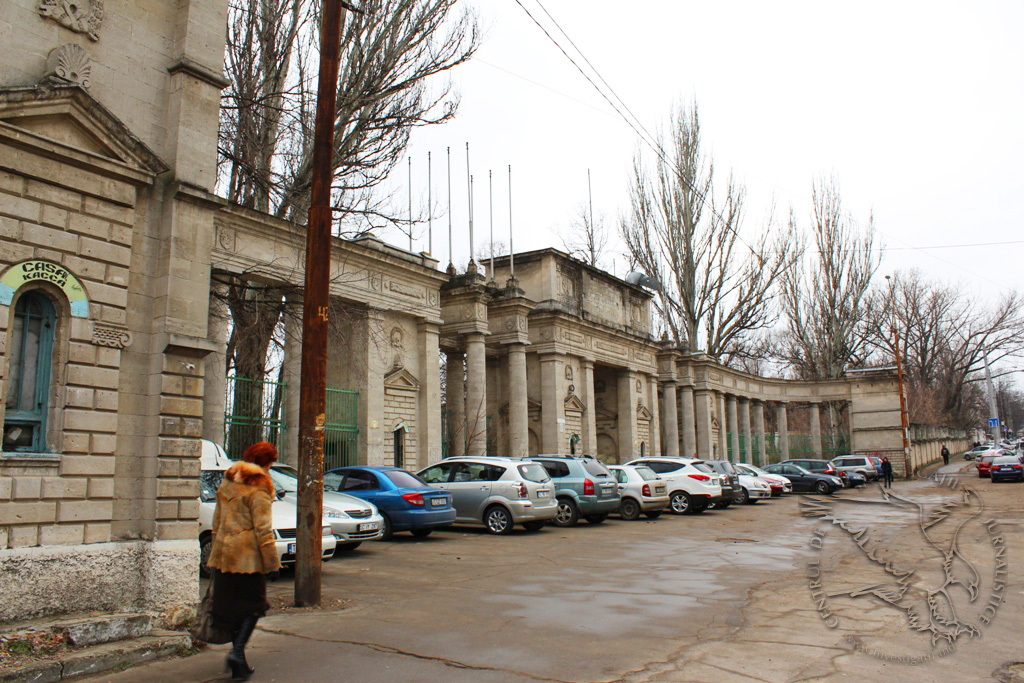
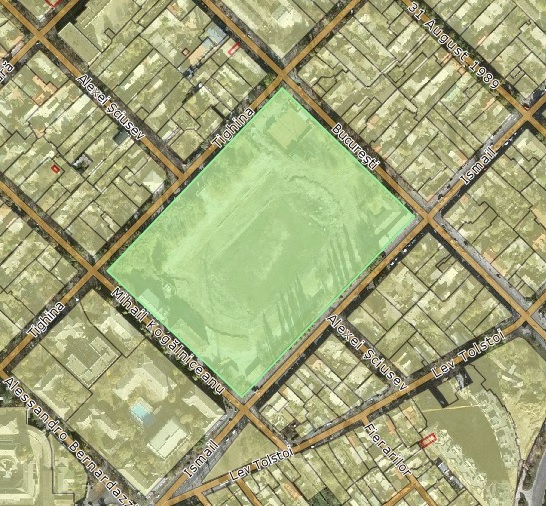
In 2006, according to a Decree issue by the Government led by Tarlev, the Sports Agency was empowered to identify an investor to rebuild the National Stadium, and the Agency for Construction and Territorial Development was entitled to manage the works of reconstruction of the sports complex. Shortly after that, the authorities of the Ministry of Construction and Territorial Development designated the company Basconslux LLC to carry out the demolition works, based on a permit issued by Chişinău Municipal Council. Back then, the authorities promised to that company eight million lei after finishing the works and the sports fans were said that the arena would open its doors in 2009.
In July 2013, six years after the execution of works, the representatives of Basconslux attempted to recover their money through a lawsuit. Lawyers explained that there was a works contract under which the company had to perform the demolition works at its own expenses, "with further reimbursement of the incurred expenditures", as well as a letter signed by A. Turcan, Deputy Director of the Agency for Construction and Territorial Development, and by Vasile Tarlev, ex-Prime Minister, as a guarantee for the payment. In the same time, they said a report on the acceptance of works was issued, being signed by the representatives of several State institutions and approved by the Ministry of Construction and Territorial Development. The company claimed it had sent to all the concerned institutions requests for the payment of the debt, but it received just answers that no financial resources were foreseen in the State budget for that purpose in 2007-2013.
Works executed without any procurement contract?
In the framework of the lawsuit, the representative of the Ministry of Finance argued among other that no contract had been signed between the institution and Basconslux LLC. "To be valid, an alleged works contract has to undergo the public procurement phase and be registered at the State Treasury, what has not been established in this case", the lawyers of Ministry of Finance argued. The representative of the Ministry of Construction and Regional Development did not confirm in the court the existence of such a contract either. "The public procurement of services shall be done based on a written works contract, following a strict procedure prescribed by law and cannot be replaced by letters, telegrams, etc.", they stated, specifying that, according to the law, the general time limit for starting a court action is three years and not more.
Basconslux SRL and authorities
The representatives of the Ministry of Youth and Sports (the successor of the Sports Agency – the editor’s note) declared in the court that their institution was not aware of the way how the company Basconslux had been selected to perform the demolition works and that the contractor had not submitted any procurement contract on the execution of works, nor any other document to confirm that it had been selected in the framework of a public tender.
However, in July 2014, the Court of Centre district of the capital city issued a favourable decision for the company Basconslux LLC, compelling the Ministry of Finance to reimburse the costs of the demolition works: more than eight million lei, as well as the late payment interest estimated at approximately six million lei. The judge Garri Buffalo grounded his decision on the fact that an exchange of letters or telegrams may give evidence of a works contract and that the limitation period started to run in 2013, when the complainant was informed that it would not have the money it claims, not in 2007.
A few months later, the Court of Appeals rejected the decision of the first instance court, arguing that public procurement of services shall be done based on a written works contract, which cannot be replaced by letters and that, in reality, there was no document confirming that the company Basconslux LLC was selected to demolish the National Stadium. The judges of the Court of Appeals also invoked the limitation period of three years and the fact that the launch of the lawsuit in 2013 was "belated".
In April 2015, Basconslux LLC won a new lawsuit at the Supreme Court. The judges Iulia Sîrcu, Galina Stratulat, Iuliana Oprea, Ion Druţă and Ion Corolevschi issued a final judgement which recognized the works contract and maintained the first instance court decision.
The Ministry of Finances in search for truth at the Superior Council of Magistracy
On the other hand, the Ministry of Finance put its foot down. The representatives of the institution submitted meanwhile two motions for revision of the Supreme Court judgement, but both of them were rejected as unfounded. Nevertheless, on 19th of August 2015, was submitted a complaint to the Superior Council of Magistracy, requesting the punishment of the judges "who are responsible for the prejudice at a particularly large extent to the State budget."
Maria Cărăuş, Deputy Minister of Finance, re-evoked in the letter a number of irregularities committed by the judges while making that judgement: the request for summons filed by Basconslux LLC was signed by a person who was not legally authorised; the document was filed without paying the State charge of 50,000 lei, as required by the law and the Court of Appeals refused to comment on this issue; the request was accepted, even if the limitation period of three years was exceeded; the works contract was recognized as valid, despite the fact that it was not registered at the State Treasury, as provided by the Law on the procurement of goods, works and services for the State’s needs, in force at that time. A few days later, the judge-inspector Valeriu Catan issued a decision for the rejection of the notification of the Ministry of Finance, arguing that "the allegations against the magistrates are not part of the list of disciplinary offenses specified by Article 4 of the Law on the disciplinary liability of judges."
On the 18th of September 2015, the Ministry of Finance, in the person of ex-Minister Anatol Arapu, challenged the decision of the Judicial Inspection, requesting the examination of the case by the plenum of the Disciplinary Board of the Superior Council of Magistracy. The subject was scheduled to be debated on Friday, 12th of February, at the meeting of the admissibility panel of the Disciplinary Board.
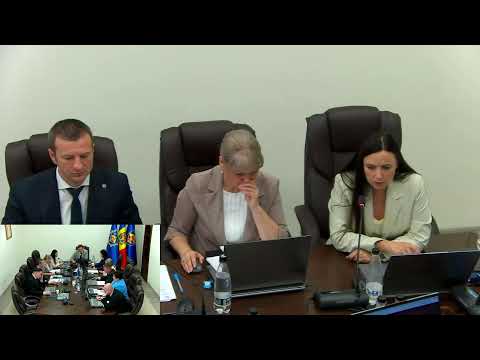
The issue of the National Stadium was also discussed at the meeting of the Superior Council of Magistracy held on Tuesday, 9th of February. During the deliberations on filling the vacant position of President of the Supreme Court, the current president and the only candidate in the contest, Mihai Poalelungi, was asked by the member of the Superior Council of Magistracy, Tatiana Răducanu, judge at the Supreme Court, to comment on the fact that the State was compelled to pay 14 million lei to the construction company that demolished the arena. "You say that every judge is responsible for his/her decisions, but your voice is not heard. That means that you tolerate everything that happens at the Supreme Court. Do not hide anymore behind the judges. You are in charge of the Supreme Court, you must be an example", Tatiana Răducanu said. "Do not make yourself out to be an example", President of the Supreme Court retorted.
Maria Cărăuş, Deputy Minister of Finance, says that the notification submitted to the Superior Council of Magistracy was the last lever which might be used by the institution she represents. "A final and irrevocable judgement was issued on this case. The enforceable title (on the payment of the amount of money) submitted to us contained errors, but it had been sent to the business entity. The last lever that the ministry could use was to file a complaint to the Superior Council of Magistracy", Maria Cărăuş stated.
The Deputy Minister also said that the amount of 14 million lei was not paid to the construction company, because there is no finality in the case yet. "According to the law, the ministry must enforce the court judgements within a six-month period of time. We are compelled to enforce the judgment, only when this term expires. The ministry does not make such payments before the expiry of the six-month period, because it does not have resources available for this purpose", Maria Cărăuş added.
"If the motions for revision of the judgements are rejected and the creditor submits a corrected enforceable title, the Ministry of Finance will be obliged to enforce the judgement of the Supreme Court", specifies an official response issued by the institution to the Centre for Journalistic Investigations. According to the same document, in 2015, the State budget allocated nearly 62 million lei for the enforcement of national and international court judgments.
How the stadium looks nowadays:

Textele de pe pagina web a Centrului de Investigații Jurnalistice www.anticoruptie.md sunt realizate de jurnaliști, cu respectarea normelor deontologice și sunt protejate de dreptul de autor. Preluarea textelor știrilor și a investigațiilor jurnalistice se realizează în limita maximă de 500 de semne. În mod obligatoriu, în cazul paginilor web (portaluri, agenții, instituţii media sau bloguri) trebuie indicat şi linkul direct la articolul preluat de pe www.anticoruptie.md în primul alineat, iar în cazul posturilor de radio și TV – se citează obligatoriu sursa. Preluarea integrală a textelor se poate realiza doar în condiţiile unui acord prealabil semnat cu Centrul de Investigații Jurnalistice.
.jpg)
.jpg)
.jpg)





Subscribe